
Download Tech Manuals
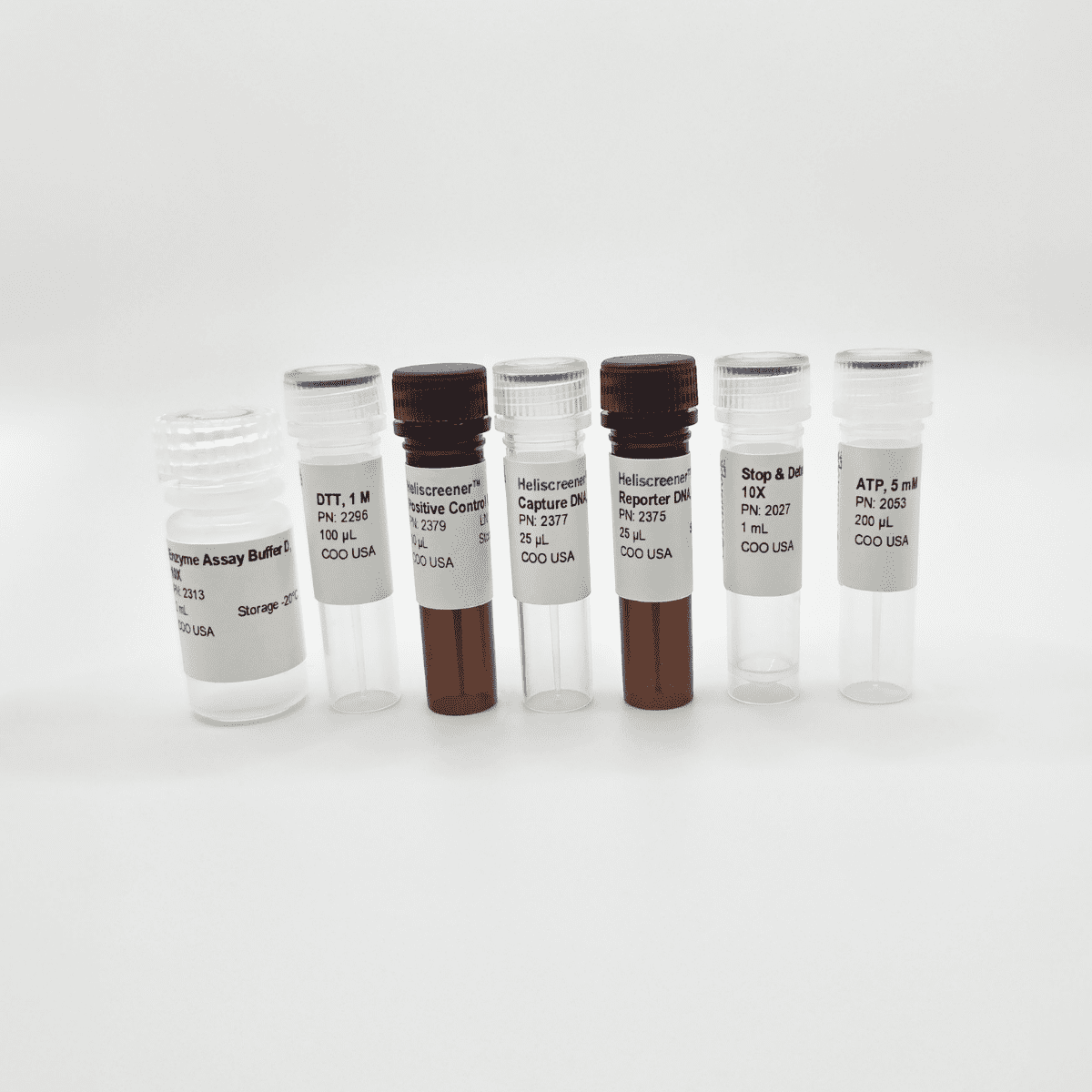
Single-Step DNA Unwinding Assay for Screening and Lead Discovery
- Measure the activity of BLM helicase via DNA unwinding
- Simple - Mix-and-read HTS-ready format
- Uncover and validate novel BLM helicase inhibitors
- Robust Assay Z’ > 0.7 under initial velocity conditions
- Flexible - Use for inhibitor screening, dose-response assays, kinetic, and mechanistic analysis
Is your plate reader compatible? Find out now!
Custom Sizes and Bulk Pricing Available Contact Us for an HTS-scale Quote!


